
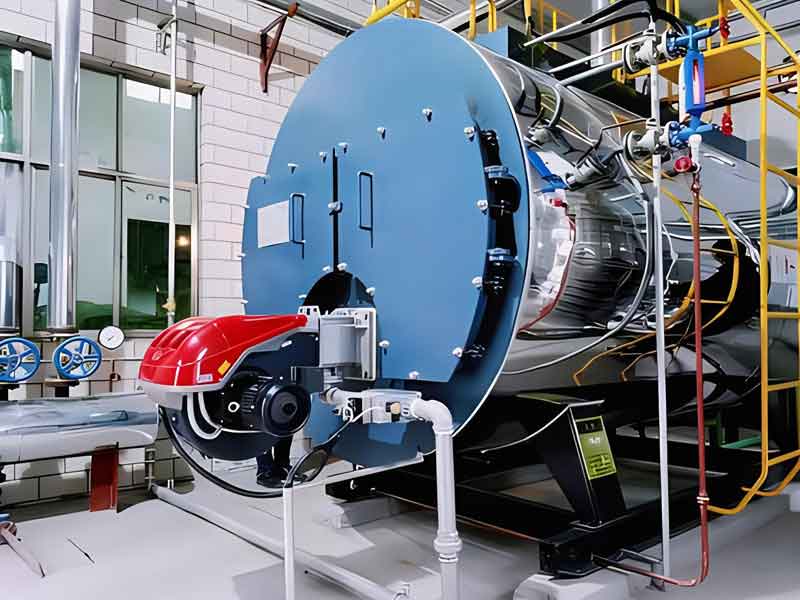
Importance and Applications
High-pressure boilers are critical to the oil and gas industry, where efficient heat transfer, steam generation, and process stability are paramount. These systems play a pivotal role in upstream, midstream, and downstream operations, including:
- Enhanced Oil Recovery (EOR): High-pressure steam injection improves oil mobility, allowing for more effective extraction.
- Refinery Operations: Boilers provide the steam required for critical processes such as fractional distillation, hydrocracking, and catalytic reforming.
- Gas Processing: Used for desulfurization, liquefaction, and in processes like steam methane reforming (SMR) for hydrogen production.
Their ability to produce superheated steam ensures precise control over pressure and temperature, enabling consistent product quality and energy efficiency.
Role in Enhancing Operational Efficiency
High-pressure boilers contribute significantly to operational efficiency by:
- Maximizing Thermal Efficiency: By operating at pressures exceeding 100 bar and temperatures over 500°C, these systems minimize energy loss and improve fuel-to-steam conversion.
- Reducing Downtime: Advanced designs and materials ensure minimal scaling, corrosion, and mechanical failures, leading to continuous operation.
- Supporting Energy Integration: Many systems are coupled with cogeneration units, utilizing waste heat to generate electricity or additional steam.
In oil and gas industry , these attributes translate into lower operational costs, higher yield rates, and compliance with stringent environmental standards.
Key Characteristics of High-Pressure Boilers
Design Features
High-pressure boilers are engineered to withstand extreme conditions while maintaining safety and efficiency. Key design elements include:- Water Tube Construction: Tubes carry water while combustion gases flow around them, ensuring efficient heat transfer and rapid steam generation.
- Superheater and Reheater Sections: These components enhance steam temperature and maintain high enthalpy levels, essential for processes requiring superheated steam.
- Drumless or Once-Through Designs: Advanced boilers eliminate steam drums, reducing weight and size while enabling rapid start-up and shutdown.
- Heat Recovery Systems: Many designs integrate economizers and air preheaters to recover waste heat, further improving efficiency.
Operating Pressure and Temperature Ranges
Modern high-pressure boilers operate at:- Pressure: Typically between 100 to 300 bar, with ultra-supercritical designs exceeding 400 bar.
- Temperature: Outlet steam temperatures often range from 500°C to 650°C, with higher temperatures enhancing thermal efficiency.
Material Selection for Durability and Heat Resistance
Material integrity is crucial given the aggressive conditions within high-pressure boilers. Common materials include:- Steel Alloys: Grades such as T91 and P91 offer excellent creep resistance and high-temperature strength.
- Nickel-Based Alloys: Materials like Inconel provide superior corrosion resistance in high-temperature, sulfur-laden environments.
- Ceramic Coatings: Often applied to critical components to resist scaling and oxidation.
Types of High-Pressure Boilers Used in Oil and Gas
Water Tube Boilers
Water tube boilers dominate high-pressure applications in the oil and gas industry due to their ability to handle extreme pressures and temperatures. Key characteristics include:
- Operation: Water flows through tubes while the combustion gases heat the external surfaces.
- Advantages:
- High thermal efficiency and quick heat transfer.
- Compact design for large steam outputs.
- Scalability to ultra-supercritical pressure levels (>300 bar).
- Applications: Widely used in refineries for steam generation in hydrocracking and desulfurization processes.
Fire Tube Boilers
Fire tube boilers, while less common in high-pressure applications, are occasionally used in specific scenarios requiring moderate pressure and smaller steam capacities.
- Operation: Combustion gases pass through tubes surrounded by water.
- Advantages:
- Simpler design and ease of maintenance.
- Suitable for low-to-medium pressure applications.
- Applications: Typically used in auxiliary systems or smaller process units within oil and gas facilities.
Circulating Fluidized Bed (CFB) Boilers
CFB boilers are ideal for combustion of diverse fuel types, including low-grade fuels and byproducts.
- Operation: Fuel is combusted in a bed of sand and limestone, with air recirculated to optimize combustion.
- Advantages:
- Flexibility to burn a wide range of fuels, including petroleum coke and biomass.
- Low NOx and SOx emissions due to in-situ desulfurization and staged combustion.
Applications: Often employed in power plants integrated into oil refineries, leveraging waste materials for energy generation.
Thermodynamics and Heat Transfer Principles in High-Pressure Boilers
Basics of Steam Generation
High-pressure boilers function on fundamental thermodynamic principles to generate steam efficiently:
- Heat Input: Combustion of fuel releases thermal energy, transferred to water in the boiler.
- Phase Transition: Heat energy raises the water temperature to its boiling point at elevated pressures, converting it into steam.
- Superheating: Steam is further heated beyond saturation temperature, increasing its enthalpy and preventing condensation during expansion.
The process leverages the Rankine cycle for maximum energy conversion, making it highly efficient for industrial operations.
Heat Recovery Mechanisms
Heat recovery mechanisms are crucial in optimizing boiler efficiency and minimizing energy waste:
- Economizers: Preheat feedwater using flue gas, reducing the thermal load on the boiler.
- Air Preheaters: Utilize exhaust gases to warm combustion air, improving fuel combustion efficiency.
- Waste Heat Recovery Units (WHRUs): Capture residual heat from processes or exhaust gases to generate additional steam or electricity.
Advantages of Using High-Pressure Boilers
Efficiency Gains
High-pressure boilers significantly enhance the efficiency of industrial operations in the oil and gas sector by:
- Improved Heat Transfer: Operating at higher pressures and temperatures improves the thermodynamic efficiency of the steam cycle. Superheated steam reduces energy losses during expansion in turbines or industrial processes.
- Reduced Fuel Consumption: Efficient heat utilization translates to lower fuel requirements for a given steam output, optimizing operational costs.
- Enhanced Heat Recovery: Integration with economizers, air preheaters, and waste heat recovery units (WHRUs) ensures maximum use of available energy, reducing overall system entropy.
Fuel Flexibility
Modern high-pressure boilers are engineered to handle diverse fuel types, offering significant flexibility in fuel selection:
- Primary Fuels: Natural gas, oil, and petroleum derivatives such as naphtha or refinery gas.
- Alternative Fuels: Ability to combust low-grade fuels like residual oil, petroleum coke, and even process byproducts such as sour gas or sludge.
- Co-Firing Capabilities: Many designs support co-firing with renewable biomass or waste fuels, balancing operational costs and sustainability goals.
This flexibility is critical for oil and gas operations, where fuel availability can vary depending on location, process needs, and market conditions. By adapting to different fuels, boilers ensure uninterrupted steam supply and cost-effective operations.
Reduced Emissions and Environmental Compliance
High-pressure boilers contribute to environmental compliance by integrating advanced combustion and emission control technologies:
- Low NOx Burners: Reduce nitrogen oxide formation during combustion by staging and controlling flame temperature.
- In-Situ Desulfurization: Features like limestone injection in circulating fluidized bed (CFB) boilers minimize sulfur dioxide (SO₂) emissions.
- Efficient Combustion: Higher efficiency means less fuel is burned for the same output, lowering carbon dioxide (CO₂) emissions per unit of energy.
Boiler Design Considerations for Oil and Gas Applications
Combustion System Design
The combustion system is a cornerstone of high-pressure boiler design in oil and gas applications, as it directly impacts fuel efficiency, emissions, and operational stability. Key elements include:
- Burner Configuration:
- Multi-fuel burners enable the use of various fuels, such as natural gas, oil, or process byproducts.
- Advanced low-NOx burners reduce nitrogen oxide emissions by managing flame temperature and staging combustion.
- Air-Fuel Ratio Control:
- Precise control ensures complete combustion, minimizing unburned hydrocarbons and CO emissions.
- Integrated oxygen and temperature sensors allow real-time adjustments, optimizing fuel utilization.
- Flame Stability and Safety:
- Stable flame geometry is maintained using swirl stabilizers and air distribution mechanisms, critical for high-pressure operation.
- Safety mechanisms, such as flame detection and automatic shutdown systems, protect against furnace explosions.
Heat Exchanger and Steam Drum Engineering
Efficient heat exchanger and steam drum designs are critical for maximizing energy transfer and ensuring safe operation:
- Heat Exchangers:
- Superheaters and Reheaters: Constructed from high-grade alloys to withstand extreme temperatures, these components raise steam to superheated states for turbine efficiency.
- Economizers: Preheat feedwater using exhaust gases, reducing boiler thermal load and enhancing fuel efficiency.
- Steam Drums:
- Function as separation chambers to eliminate impurities and entrained water droplets, delivering high-quality steam.
- Internally equipped with cyclone separators or baffles for effective steam-water separation.
- Designed for high pressures, with materials like P91 steel to resist creep and thermal fatigue.
Noise and Vibration Reduction
Noise and vibration management is crucial for maintaining equipment integrity and ensuring safety in high-pressure boilers:
- Acoustic Barriers: Use of insulation and sound-absorbing materials around boiler casings.
- Damper Systems: Damping mechanisms, such as resilient mounts, reduce mechanical vibrations from rotating equipment like fans and pumps.
- Flow Design Optimization: Ensures smooth gas and water flow, reducing turbulence-induced noise.
- Compliance Standards: Boilers must adhere to OSHA and ISO noise control standards, particularly in refineries and offshore platforms where safety is paramount.
Fuel Types and Combustion in High-Pressure Boilers
Natural Gas Combustion
Natural gas is the primary fuel for high-pressure boilers due to its availability, clean combustion properties, and high calorific value:
- Combustion Efficiency: High flame stability and complete combustion minimize unburned hydrocarbons and CO emissions.
- Emissions Profile: Produces significantly lower NOx and SOx emissions compared to oil-based fuels, facilitating compliance with environmental regulations.
- Challenges: Requires robust gas supply infrastructure and high-pressure piping systems to manage its volatility and pressure requirements.
Oil-Based Fuels and Their Implications
Oil-based fuels, including heavy fuel oil (HFO) and light distillates, are often used where natural gas is unavailable:
- Combustion Characteristics:
- HFO requires preheating to reduce viscosity and ensure proper atomization in burners.
- Light oils combust easily but may require additional emission controls to manage particulates and NOx.
- Operational Considerations:
- Higher maintenance due to fouling and slagging in combustion chambers.
- Requires advanced soot blowers and water washing systems to clean heat exchanger surfaces.
- Environmental Impact: High sulfur content in heavy oils necessitates sulfur scrubbing technologies to meet emission standards.
Co-Firing Options for Sustainability
Co-firing integrates multiple fuel types, often combining fossil fuels with renewable or waste-derived fuels:
- Advantages:
- Reduces reliance on primary fuels, lowering costs and environmental impact.
- Biomass or waste fuel co-firing can generate renewable energy credits and improve carbon footprint metrics.
- Technology Considerations:
- Boilers must incorporate dual-fuel burners capable of switching seamlessly between fuels.
- Specialized feeding systems for biomass or waste fuels, such as pneumatic conveyors or vibratory feeders.
- Case Studies: Co-firing petroleum coke with biomass in circulating fluidized bed (CFB) boilers has shown significant reductions in CO2 emissions while maintaining high thermal efficiency.
Advancements in Boiler Technology
Digital Monitoring and Automation
Digitalization has transformed boiler operations, enabling real-time monitoring, diagnostics, and control. Key advancements include:
- Integrated Control Systems:
- Advanced Distributed Control Systems (DCS) and Programmable Logic Controllers (PLCs) manage boiler parameters such as pressure, temperature, and fuel flow with high precision.
- Algorithms leverage data analytics for predictive maintenance and performance optimization.
- IoT Sensors and Cloud Connectivity:
- Internet of Things (IoT) sensors provide continuous data streams for remote monitoring of critical components like steam drums, heat exchangers, and burners.
- Cloud-based platforms allow centralized data analysis, enabling operators to address issues proactively across multiple facilities.
- Automated Combustion Tuning:
- AI-powered systems dynamically adjust air-fuel ratios, optimizing combustion efficiency and reducing emissions.
- Adaptive learning models predict fuel requirements based on load variations and environmental conditions.
- Benefits for Oil and Gas Applications:
- Enhanced safety through real-time alerts for potential failures.
- Reduced downtime with predictive analytics that detect wear and tear before breakdowns occur.
- Improved regulatory compliance through automated reporting of emissions and performance metrics.
High-Efficiency Heat Recovery Systems
Maximizing energy efficiency through heat recovery is a core focus of modern boiler technology. Recent advancements include:
- Advanced Economizers:
- Dual-stage economizers preheat feedwater more effectively by capturing additional heat from exhaust gases.
- Compact, modular designs reduce installation footprints without compromising performance.
- Air Preheaters:
- Regenerative air preheaters, using rotating heat transfer surfaces, improve efficiency by up to 20%.
- High-temperature alloys extend operational life in corrosive environments.
- Heat Recovery Steam Generators (HRSGs):
- Optimized for cogeneration, HRSGs capture exhaust heat from gas turbines to produce steam, achieving overall plant efficiencies exceeding 60%.
- Enhanced designs minimize pressure drops, improving energy output and reducing operational costs.
Innovations in Boiler Materials
Material advancements are critical to increasing boiler longevity, efficiency, and resistance to harsh conditions:
- High-Creep Strength Alloys:
- Materials like T92 and Super 304H provide excellent resistance to deformation at elevated pressures and temperatures.
- These alloys enable operations at ultra-supercritical conditions (700°C and 350 bar).
- Corrosion-Resistant Coatings:
- Advanced ceramic coatings protect internal surfaces from scaling and oxidation in high-sulfur environments.
- Plasma-sprayed coatings extend the lifespan of heat exchanger components exposed to aggressive combustion byproducts.
- Nanostructured Materials:
- Incorporating nanoparticles enhances thermal conductivity and mechanical strength.
- Innovations in this domain promise lighter, more efficient components with extended service life.
Maintenance and Inspection Best Practices
Routine and Preventive Maintenance
Regular maintenance ensures optimal boiler performance and minimizes downtime:
- Daily and Weekly Checks:
- Monitor water levels, pressure, and temperature for deviations.
- Inspect burner operation and combustion quality to ensure efficiency.
- Scheduled Maintenance:
- Clean heat exchanger surfaces to remove soot and scale deposits that reduce thermal efficiency.
- Lubricate moving parts, such as feedwater pumps and dampers, to prevent mechanical wear.
- Preventive Measures:
- Install corrosion inhibitors in boiler water systems.
- Replace worn-out gaskets and seals proactively to prevent leaks.
Non-Destructive Testing (NDT) Techniques
NDT methods are indispensable for assessing boiler integrity without causing damage:
- Ultrasonic Testing (UT):
- Detects wall thinning and cracks in pressure vessels and piping.
- Ideal for assessing high-stress areas like steam drum shells and tube welds.
- Magnetic Particle Testing (MPT):
- Identifies surface and near-surface flaws in ferromagnetic components such as superheater tubes.
- Radiographic Testing (RT):
- Uses X-rays or gamma rays to reveal internal flaws in welds and boiler components.
- Commonly employed during fabrication or major overhauls.
- Acoustic Emission Testing (AET):
- Monitors real-time sound waves generated by material stress, helping detect active crack propagation or corrosion.
Boiler Water Chemistry Management
Maintaining water quality is critical to preventing scaling, corrosion, and operational inefficiencies:
- Key Parameters:
- Monitor pH, dissolved oxygen, and hardness levels.
- Use chemical treatments to control alkalinity and silica deposition.
- Treatment Systems:
- Deaerators: Remove dissolved oxygen to prevent pitting corrosion.
- Softening Systems: Reduce calcium and magnesium concentrations to minimize scale formation.
- Blowdown Systems: Remove concentrated impurities periodically to maintain boiler water balance.
- Best Practices:
- Conduct regular water analysis to detect early signs of contamination.
Utilize automated dosing systems for consistent chemical injection.


