
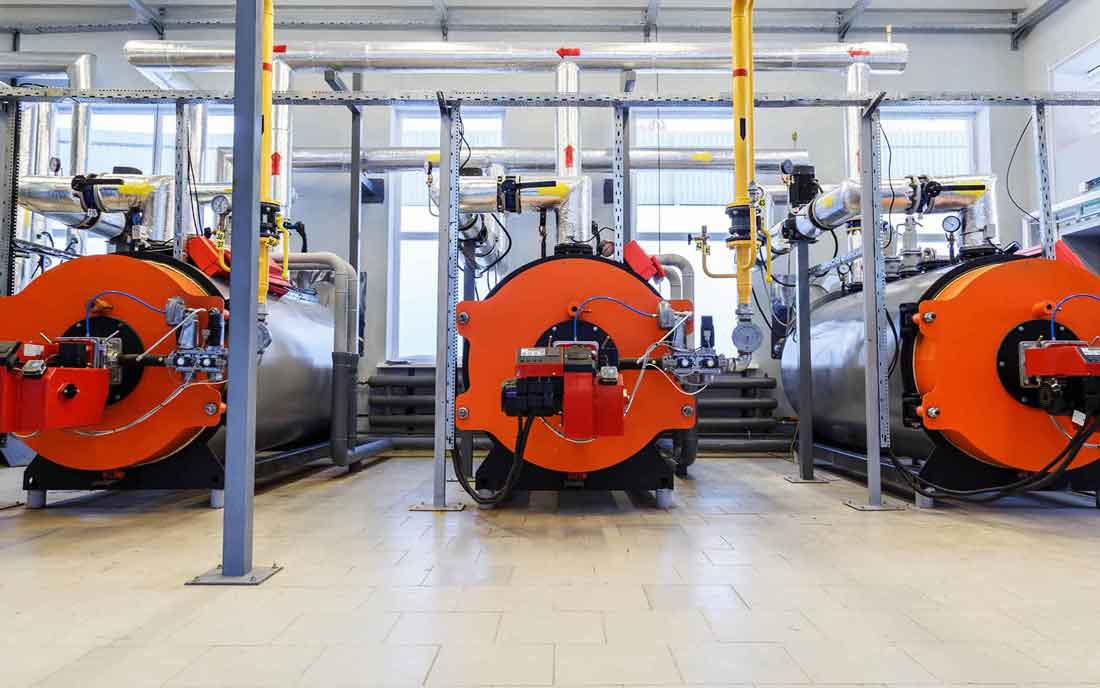
Boiler sizing in power plant design is more than a simple calculation of steam demand. It’s a complex process influenced by various factors, including turbine steam requirements, material limitations, and system constraints.
Table of Contents
- Introduction
- Importance of Proper Boiler Sizing
- Impact on Power Plant Efficiency and Longevity
- Key Factors in Boiler Sizing
- Plant Power Output Requirements
- Steam Turbine Compatibility
- Fuel Type and Availability
- Process Steam vs. Power Generation Needs
- Thermodynamic Principles and Boiler Sizing
- Steam Demand and Heat Balance Calculations
- Boiler Efficiency and Heat Loss Considerations
- Pressure and Temperature Requirements
- Types of Boilers for Power Plants
- Fire-Tube vs. Water-Tube Boilers
- Supercritical and Ultra-Supercritical Boilers
- Advanced Features: Low NOx Burners, Economizers
- Sizing Calculation: Step-by-Step Guide
- Data Collection: Turbine and Plant Specifications
- Load Profile Analysis
- Boiler Size Determination: Practical Examples
- Common Challenges and Solutions
- Over-Sizing vs. Under-Sizing Risks
- Addressing Load Variability and Future Expansion
- Mitigating Fouling, Scaling, and Corrosion
- Compliance with Industry Standards
- ASME and EN Boiler Codes
- Environmental Regulations and Emission Standards
- Technological Innovations in Boilers
- Digital Twin Technology for Sizing Accuracy
- Smart Boilers with IoT Integration
- Advances in Materials and Design
- Conclusion
- Summary of Best Practices
- Recommendations for Engineers and Consultants
- Frequently Asked Questions (FAQ)
- What Are the Signs of an Improperly Sized Boiler?
- How Does Boiler Size Affect Maintenance Costs?
- What Tools Can Engineers Use for Sizing Calculations?
1. Introduction
Importance of Proper Boiler Sizing
In power plant design, boiler sizing is more than a simple calculation of steam demand—it is a multidimensional challenge that directly affects plant performance, equipment lifespan, and operational efficiency. Engineers tasked with replacing turbines must consider the interplay between steam requirements, material capabilities, and system constraints.
An appropriately sized boiler ensures precise delivery of steam at the desired pressure and temperature, aligning seamlessly with turbine requirements. For instance, ultra-supercritical turbines may demand steam conditions exceeding 600°C and 300 bar, necessitating the use of advanced materials such as P91/P92 steels for waterwall panels and Inconel alloys for superheaters and reheaters. These materials provide high creep resistance and thermal stability but require specific design tolerances that only a well-sized boiler can meet.
Incorrect sizing introduces inefficiencies such as:
- Over-Sizing: Operating below design capacity leads to thermal inefficiencies, higher emissions, and reduced boiler life due to prolonged operation under low-load conditions.
- Under-Sizing: Failing to meet turbine steam demand results in power loss, turbine damage from wet steam, and operational instability, especially during peak loads.
Effective boiler sizing also accounts for dynamic load variations, ensuring stable performance without excessive cycling. This stability is particularly critical for plants using renewable integration or co-firing with alternative fuels, where boiler adaptability plays a central role in maintaining efficiency.
Impact of boiler sizing on Power Plant Efficiency and Longevity
Proper boiler sizing is a cornerstone of achieving high thermal efficiency and long-term operational reliability. Missteps in sizing can ripple through the entire system, leading to inefficiencies and premature failures.
- Thermal Efficiency:
The thermal efficiency of a power plant is directly tied to its boiler’s ability to generate steam within precise parameters. For example, supercritical and ultra-supercritical boilers operate at higher pressures and temperatures, which demand advanced material grades such as T91/T92 or HR3C for superheater tubes to withstand extreme conditions. Mis-sized boilers, however, often force these materials into regimes of excessive stress, accelerating degradation. - System Integration and Turbine Compatibility:
Steam quality—particularly dryness fraction and enthalpy—is crucial for turbine efficiency and longevity. Boilers producing suboptimal steam quality due to improper sizing risk increased turbine blade erosion and fouling. Comparatively, boilers sized for precise turbine requirements minimize such risks, improving overall plant reliability. - Operational Flexibility:
Modern power plants often face fluctuating loads due to grid demands or hybrid fuel usage. A properly sized boiler accounts for these variations without frequent cycling, which can lead to material fatigue. Advanced boiler designs using membrane waterwall panels and composite tube materials reduce stress concentrations during such transitions, extending operational life. - Environmental and Economic Impacts:
Boilers sized correctly for their application reduce fuel wastage and emissions, helping power plants adhere to stringent environmental regulations. Over-sized boilers, for instance, burn excess fuel at partial loads, producing more NOx, SOx, and particulate emissions, which require costly mitigation measures. - Case Example – Retrofit Challenges:
Retrofitting a boiler for a replacement turbine offers unique challenges, such as compatibility with newer, more efficient turbine designs. For example, a subcritical boiler retrofitted for ultra-supercritical turbine compatibility may require replacing traditional materials with high-performance alloys like Sanicro 25 or Incoloy 800H to handle higher steam parameters. This underscores the need for precise sizing to avoid retrofitting pitfalls.
2. Key Factors in Boiler Sizing
Plant Power Output Requirements
The foundation of boiler sizing lies in accurately determining the plant’s power output requirements. This involves detailed load analysis and understanding peak, base, and fluctuating power demands. For example, a plant designed for 500 MW output with a steam turbine operating at 45% efficiency would demand a boiler capable of delivering sufficient steam at the required enthalpy.
Key considerations include:
- Thermal Input to Electric Output Ratio: This ratio, governed by the Rankine cycle, requires accurate heat balance calculations to ensure that the boiler delivers adequate heat for the turbine’s conversion efficiency.
- Capacity Margin: Engineers often include a margin (e.g., 10–20%) to account for future expansions, load variability, and equipment degradation over time.
Material Comparison: High-capacity boilers (e.g., ultra-supercritical) utilize P91 or P92 steels for main components like waterwalls and economizers due to their excellent high-temperature strength and creep resistance. For smaller plants or lower-pressure systems, T22 or T12 steels may suffice, offering a cost-effective but less robust alternative.
Steam Turbine Compatibility
Proper alignment between boiler output and turbine inlet conditions is crucial. Turbines are highly sensitive to steam quality, pressure, and temperature. Any deviation can cause inefficiencies or damage, such as blade erosion from wet steam or thermal stress from suboptimal temperature gradients.
Key parameters include:
- Pressure and Temperature Matching: For a turbine designed for 300 bar and 600°C steam, the boiler must generate steam with minimal deviation to prevent condensation and maintain turbine efficiency.
- Steam Flow Rates: Turbine flow rate requirements must align with the boiler’s output capacity. An undersized boiler creates bottlenecks, while an oversized boiler leads to inefficiencies and thermal cycling issues.
- Superheating and Reheating Needs: Modern turbines often demand reheated steam to boost efficiency. Boilers equipped with Inconel 625 or HR3C for reheater tubes can handle these higher temperatures without significant creep deformation.
Fuel Type and Availability
The choice of fuel significantly impacts boiler design and sizing. Fuel characteristics determine combustion technology, heat transfer rates, and overall boiler performance.
Common fuel considerations:
- Coal: Pulverized coal boilers require designs optimized for slagging and fouling resistance. The use of chromium-molybdenum steels (e.g., T91) ensures longevity in such harsh environments.
- Natural Gas: Gas-fired boilers benefit from rapid startup times and lower emissions, often incorporating low-NOx burners and economizers. Materials like 310 stainless steel are often used for high-temperature components.
- Biomass and Waste Fuels: Boilers designed for biomass or alternative fuels must handle variable fuel moisture and calorific values. Materials like clad tubes (e.g., stainless steel over carbon steel) are common to resist corrosion from acidic byproducts.
Comparison: Pulverized coal boilers are typically larger and more robust than gas-fired units, given the higher thermal loads and slagging challenges. However, gas-fired boilers offer more flexibility and lower emissions, making them suitable for hybrid or renewable-integrated plants.
Process Steam vs. Power Generation Needs
In plants with dual roles—power generation and industrial steam supply—boiler sizing becomes even more complex. Process steam applications (e.g., petrochemical plants, food processing) often require varying pressures and temperatures, demanding flexible boiler designs.
Key considerations include:
- Pressure Tiers: Multi-pressure boilers with drum separators and headers are ideal for plants requiring simultaneous high-pressure and low-pressure steam.
- Load Prioritization: Boilers may need to prioritize process steam during peak industrial demand while maintaining sufficient capacity for turbine operation.
- Material Implications: Dual-purpose boilers often experience fluctuating operating conditions, necessitating materials with exceptional fatigue resistance, such as T23 steel for waterwalls and Incoloy 800H for superheater tubes.
Case Example:
A cogeneration plant supplying 100 MW of electricity and 200 tons/hour of process steam at 15 bar might require a hybrid boiler capable of handling these dual loads without compromising efficiency. In this case, a CFB boiler with multi-pressure drums might be selected for its flexibility and adaptability.
3. Thermodynamic Principles and Boiler Sizing
Steam Demand and Heat Balance Calculations
The cornerstone of boiler sizing lies in precise heat balance calculations that account for steam demand, turbine efficiency, and system losses. These calculations are governed by the First Law of Thermodynamics and form the basis for determining the required boiler capacity.
Key aspects include:
- Steam Flow Rate Calculation:
- The mass flow rate of steam (m˙s\dot{m}_s) is calculated based on the turbine power output (PP), enthalpy drop in the turbine (h1−h2h_1 – h_2), and turbine efficiency (ηt\eta_t): m˙s=Pηt(h1−h2)\dot{m}_s = \frac{P}{\eta_t (h_1 – h_2)}
- Example: For a 250 MW turbine with 85% efficiency and an enthalpy drop of 1,500 kJ/kg, the required steam flow rate is approximately 196.1 kg/s.
- Heat Input Requirements:
- The boiler must supply the heat needed to convert feedwater at subcooled conditions to superheated steam. This includes:
- Sensible heat to raise water temperature.
- Latent heat of vaporization.
- Superheat energy for achieving desired turbine inlet conditions.
- Material Impact: High-temperature applications often require Inconel 740H or HR3C alloys in superheater tubes to withstand extreme thermal loads.
- The boiler must supply the heat needed to convert feedwater at subcooled conditions to superheated steam. This includes:
- Heat Balance Diagrams (HBD):
Engineers rely on HBDs to visualize energy distribution across the system, including heat input, losses, and work output. Accurate HBDs are critical for optimizing boiler sizing while minimizing inefficiencies.
Boiler Efficiency and Heat Loss Considerations
Boiler efficiency directly influences the sizing process by determining the total fuel input required to meet the calculated steam demand. Efficiency is typically categorized as gross or net, with modern boilers achieving upwards of 90% efficiency under optimized conditions.
Key Sources of Heat Loss:
- Stack Losses:
- Caused by high flue gas temperatures and incomplete combustion.
- Advanced designs incorporate air preheaters and economizers to recover heat. For example, tubular air preheaters made from Corten steel offer corrosion resistance in acidic environments.
- Radiation and Convection Losses:
- Occur from the boiler casing and exposed surfaces.
- Minimization strategies include ceramic fiber insulation for high-temperature zones and calcium silicate boards for economizers.
- Unburned Combustibles:
- Losses in fly ash and bottom ash due to incomplete fuel combustion.
- Fluidized bed boilers with optimized bed temperatures (850–900°C) ensure complete combustion, reducing unburned losses.
Material Comparisons:
- Carbon Steel: Suitable for low-temperature economizers but lacks durability at higher temperatures.
- P91 and P92 Steels: Ideal for high-pressure, high-temperature zones due to excellent creep resistance and low thermal expansion.
Pressure and Temperature Requirements
Modern boiler sizing must precisely meet the pressure and temperature specifications dictated by the steam turbine design. These parameters influence the selection of boiler components and materials, as well as overall performance.
Pressure Considerations:
- Boilers for subcritical turbines typically operate below 220 bar, while ultra-supercritical boilers exceed 300 bar.
- Material Requirements: High-pressure zones demand creep-resistant materials like T23 steel, which combines strength with weldability, reducing construction complexity.
Temperature Considerations:
- Steam temperatures in ultra-supercritical plants often exceed 600°C. Maintaining material integrity at these temperatures is critical.
- Material Comparisons for High-Temperature Applications:
- Inconel 625: Excellent oxidation resistance but costly.
- Super 304H Stainless Steel: Balances cost and high-temperature performance.
- HR6W Alloy: Advanced material for reheater and superheater tubes in extreme conditions.
Integration with Turbine Design:
- Steam conditions must align with turbine isentropic efficiency curves to minimize entropy generation.
- Wet steam content at the turbine outlet is undesirable as it erodes blades. Boilers with double reheat designs effectively mitigate this issue by maintaining high superheat levels.
4. Types of Boilers for Power Plants
Fire-Tube vs. Water-Tube Boilers
The choice between fire-tube and water-tube boilers depends on the scale, pressure, and specific needs of the power plant.
Fire-Tube Boilers
- Configuration: In these boilers, hot flue gases pass through tubes surrounded by water.
- Applications: Common in small-scale power generation or auxiliary boilers for low-pressure steam.
- Advantages:
- Simpler design and lower initial cost.
- Easier to maintain due to fewer pressure parts.
- Limitations:
- Pressure and temperature capabilities are significantly lower, typically below 20 bar and 250°C.
- Unsuitable for modern high-capacity or high-efficiency applications.
Water-Tube Boilers
- Configuration: Water flows through tubes heated externally by combustion gases.
- Applications: Standard for utility-scale power generation due to their ability to handle high pressures and temperatures.
- Advantages:
- Capable of pressures exceeding 300 bar and temperatures above 600°C.
- High heat transfer rates due to large surface area.
- Faster response to load changes, making them ideal for flexible operations.
- Limitations:
- Higher initial cost and complex construction.
- Maintenance requires specialized skills, especially for welded joints and tube repairs.
Material Comparison: Water-tube boilers often employ P91 and P92 steels for high-pressure zones and Incoloy 800H for superheater tubes, whereas fire-tube boilers may use less advanced materials like carbon steel due to lower operating demands.
Supercritical and Ultra-Supercritical Boilers
These boiler types are the backbone of modern high-efficiency power plants. By operating above the critical point of water (22.1 MPa, 374°C), they eliminate the need for a distinct phase change, significantly enhancing thermal efficiency.
Supercritical Boilers
- Operating Conditions: Typically operate between 250–300 bar and temperatures of 550–600°C.
- Advantages:
- High thermal efficiency (40–45%).
- Reduced fuel consumption and lower CO₂ emissions.
- Challenges:
- Require advanced materials such as T23, T24, or Super 304H to withstand high stresses and temperatures.
Ultra-Supercritical Boilers
- Operating Conditions: Exceed 300 bar and temperatures up to 700°C.
- Advantages:
- Efficiency surpasses 45%, enabling lower fuel costs and emissions.
- Reduced size for a given power output.
- Challenges:
- Demands cutting-edge materials like HR6W alloy and Nickel-based superalloys (e.g., Inconel 740H).
- Strict operational monitoring to prevent thermal fatigue.
Comparison with Subcritical Boilers:
- Subcritical boilers, operating below 220 bar, are less efficient and typically used in older plants. Transitioning to supercritical or ultra-supercritical designs can yield a 10–15% improvement in fuel efficiency.
Advanced Features: Low NOx Burners, Economizers
Low NOx Burners
- Purpose: Reduce nitrogen oxide emissions by controlling combustion conditions.
- Mechanisms:
- Air Staging: Introduces air in multiple stages to reduce peak flame temperature.
- Flue Gas Recirculation (FGR): Mixes flue gases with incoming air to dilute oxygen and reduce combustion temperature.
- Material Impacts: Components exposed to flue gas, such as burner nozzles, are made from Inconel 600 or Stellite coatings to resist corrosion and erosion.
- Benefits:
- Meet stringent emissions standards.
- Improve overall plant sustainability.
Economizers
- Purpose: Recover waste heat from flue gases to preheat feedwater, improving boiler efficiency.
- Design Considerations:
- Typically made from carbon steel for temperatures below 300°C and low-alloy steel (e.g., T22) for higher temperatures.
- Fin tube designs enhance heat transfer.
- Efficiency Gains: Modern economizers can recover up to 5% of total energy input, translating into significant fuel savings.
- Advanced Options: Condensing economizers, capable of operating below the dew point, use stainless steel to resist acidic condensate.
Integration with Overall Design:
- Economizers and low NOx burners must be optimized as part of the boiler system. For instance, economizers that excessively cool flue gas may negatively impact burner performance and lead to condensation-related corrosion. A balanced design is essential to avoid trade-offs.
5. Sizing Calculation: Step-by-Step Guide
Boiler sizing is a precise engineering task requiring accurate data collection, analytical modeling, and practical insights to ensure optimal performance. Below is a detailed step-by-step guide.
Data Collection: Turbine and Plant Specifications
Accurate data is the foundation of boiler sizing. Key inputs include turbine specifications, process requirements, and environmental factors.
- Turbine Specifications
- Steam Flow Rate (kg/s): Determine the turbine’s required steam flow rate using the manufacturer’s design data or operational parameters. This directly informs boiler capacity.
- Inlet Steam Pressure and Temperature: These values dictate the boiler’s pressure and superheat requirements. Ultra-supercritical turbines, for instance, may require 300 bar and 650°C steam, necessitating advanced materials like T91 steel or Inconel 740H in boiler components.
- Outlet Conditions: Ensure minimal moisture content in the exhaust steam (e.g., <12%) to prevent turbine blade erosion.
- Process Steam Requirements
- For plants with cogeneration, account for both power generation and process steam needs. Example: A petrochemical plant might demand 20% of the steam output for process heating.
- Environmental and Operational Factors
- Altitude: High-altitude locations require adjustments for reduced air density, which affects combustion and heat transfer.
- Ambient Temperature: Variations can influence boiler efficiency and sizing. A tropical climate might necessitate different cooling or insulation strategies compared to a cold region.
- Fuel Type and Quality: Boilers running on high-ash coals or biomass may require larger furnace volumes and advanced cleaning systems.
Load Profile Analysis
- Peak and Base Load Requirements
- Identify peak load demands (e.g., during start-up) versus base load operation. This ensures the boiler can meet transient and steady-state requirements.
- Example: A combined cycle plant with a 500 MW turbine might require a boiler capable of supplying 450 MW-equivalent steam for base load and 500 MW during peak demand.
- Turndown Ratios
- Assess the required operational flexibility. A high turndown ratio (e.g., 5:1) is essential for plants with fluctuating loads. Boilers with gas burners generally have higher turndown ratios compared to solid-fuel systems.
- Material consideration: Refractory-lined boilers may suffer thermal shock under high turndown operations, while ceramic coatings offer better durability.
- Dynamic Response Analysis
- Analyze the plant’s load variation patterns. Plants supporting grids with renewable energy integration require boilers with rapid load-following capabilities.
Boiler Size Determination: Practical Examples
- Input Data for Sizing
- Power Output: 250 MW.
- Steam Turbine Efficiency (ηt\eta_t): 85%.
- Enthalpy Drop in Turbine: 1,500 kJ/kg.
- Boiler Efficiency (ηb\eta_b): 90%.
- Steam Flow Rate Calculation
Using the formula:
m˙s=Pηt⋅(h1−h2)\dot{m}_s = \frac{P}{\eta_t \cdot (h_1 – h_2)}
For a 250 MW turbine:
m˙s=250×1060.85⋅1,500=196.1 kg/s\dot{m}_s = \frac{250 \times 10^6}{0.85 \cdot 1,500} = 196.1 \, \text{kg/s}
- Heat Input Requirement
Heat required (QQ) to generate steam:
Q=m˙s⋅ΔhQ = \dot{m}_s \cdot \Delta h
Assuming a feedwater temperature of 80°C and steam conditions of 600°C at 250 bar:
- Δh=hsteam−hfeedwater=3,500−335 kJ/kg\Delta h = h_{\text{steam}} – h_{\text{feedwater}} = 3,500 – 335 \, \text{kJ/kg}.
- Q=196.1⋅3,165=620,516.5 kWQ = 196.1 \cdot 3,165 = 620,516.5 \, \text{kW}.
- Boiler Efficiency Consideration
Accounting for a boiler efficiency of 90%:
Required Heat Input=Qηb=620,516.50.90=689,462.8 kW\text{Required Heat Input} = \frac{Q}{\eta_b} = \frac{620,516.5}{0.90} = 689,462.8 \, \text{kW}
- Final Boiler Capacity
- Translate the heat input into equivalent fuel consumption and confirm combustion system sizing.
- Example: A natural gas boiler would require low-NOx burners and economizers to optimize efficiency at this scale.
Accurate boiler sizing involves detailed data collection, load profiling, and rigorous calculations. By incorporating real-world variables such as load variations, turbine compatibility, and environmental conditions, engineers can select boilers that not only meet operational requirements but also enhance overall plant efficiency. Using advanced materials like Incoloy alloys, T23 steel, and optimized designs ensures reliability and performance in demanding applications.
6. Common Challenges and Solutions
Over-Sizing vs. Under-Sizing Risks
Over-Sizing Risks
- Inefficient Operation: Oversized boilers operate at partial loads for extended periods, reducing thermal efficiency. For instance, operating a 500 MW-rated boiler at 30% load can lead to efficiency losses of 5-10% compared to optimal performance.
- Increased Operational Costs: Excessive start/stop cycles in oversized boilers accelerate wear on components like burners and refractory linings. Materials like dense alumina bricks in refractory regions may degrade faster under frequent thermal cycling.
- Mitigation Strategies:
- Perform load profile analysis to align boiler capacity with realistic operational needs.
- Employ boilers with modular designs, allowing additional units to be brought online during peak loads.
Under-Sizing Risks
- Operational Bottlenecks: An undersized boiler struggles to meet demand during peak loads, leading to reduced turbine output or process interruptions.
- Accelerated Wear: Operating an undersized boiler at maximum capacity for prolonged periods increases thermal stress and fatigue on pressure parts, including components made from T22 or T91 steel.
- Mitigation Strategies:
- Use boilers with higher turndown ratios (e.g., 10:1 for gas-fired units) to provide flexibility.
- Incorporate a redundancy system to meet unexpected demand surges.
Addressing Load Variability and Future Expansion
Load Variability Challenges
- Fluctuating Grid Demands: Integration of renewable energy sources (e.g., solar and wind) introduces variability, requiring boilers to ramp up and down quickly.
- Thermal Fatigue: Frequent load changes impose cyclic stresses on boiler components like headers and superheater tubes, increasing the risk of cracking.
Solutions for Load Variability
- Flexible Boiler Designs:
- Boilers with fluidized bed combustion (FBC) systems can handle load fluctuations better than traditional designs.
- Advanced materials like HR6W steel and Inconel 740H improve resistance to thermal fatigue.
- Control Systems:
- Implement advanced distributed control systems (DCS) for precise load tracking.
- Incorporate model predictive control (MPC) algorithms to optimize fuel-air ratios dynamically during rapid load changes.
Planning for Future Expansion
- Scalable Systems: Modular boilers, such as those designed with multiple drum systems, allow for incremental capacity additions.
- Thermal Storage Integration: Using thermal energy storage tanks mitigates the need for immediate boiler upgrades, providing a buffer during demand surges.
- Piping and Header Design: Use austenitic stainless steel (e.g., 316L) for headers and piping to accommodate potential flow increases while minimizing thermal stress.
Mitigating Fouling, Scaling, and Corrosion
Fouling Challenges
- Causes: Accumulation of unburned particles, ash, or slag on heat exchanger surfaces reduces heat transfer efficiency.
- Impact: Fouling in a coal-fired boiler can decrease efficiency by 1-2% for every 1 mm of deposit thickness.
- Solutions:
- Employ soot blowers made from alloy 625 for high-temperature resistance.
- Use advanced coatings like ceramic thermal barriers on tubes to minimize adhesion of slag.
Scaling Challenges
- Causes: Deposition of dissolved minerals from feedwater (e.g., calcium or magnesium salts) forms insulating layers.
- Impact: Scaling can raise tube metal temperatures, increasing the risk of rupture.
- Solutions:
- Utilize deionization systems or reverse osmosis (RO) for feedwater treatment.
- Incorporate phosphate treatment or polymer dispersants to control scale formation.
Corrosion Challenges
- High-Temperature Corrosion: Occurs in superheater regions where sulfur and vanadium compounds in fuel form aggressive deposits.
- Water-Side Corrosion: Caused by improper water chemistry, such as low pH or oxygen ingress.
- Solutions:
- For high-temperature regions, use alloys like Super 304H or Alloy 263 for tubing.
- Install deaerators and monitor water chemistry with real-time analyzers to maintain oxygen levels below 7 ppb.
7. Compliance with Industry Standards
ASME and EN Boiler Codes
ASME Boiler and Pressure Vessel Code (BPVC) The ASME BPVC is a globally recognized standard governing the design, construction, and inspection of boilers and pressure vessels. Key sections relevant to power plant boilers include:- Section I – Power Boilers:
- Covers boilers with pressures exceeding 15 psig.
- Specifies requirements for materials, design, fabrication, and testing.
- Material Standards: Requires use of materials like SA-516 Grade 70 for plates and SA-213 T22 or T91 for high-temperature tubes.
- Design Considerations: Focuses on factors such as corrosion allowances, stress limits, and weld joint efficiency.
- Section VIII – Pressure Vessels:
- Relevant for auxiliary systems like deaerators and feedwater heaters.
- Includes rules for shell thickness, nozzles, and reinforcement to handle cyclic stresses.
- ASME Code Case 2235:
- Permits advanced non-destructive examination (NDE) techniques such as phased-array ultrasonic testing (PAUT) instead of traditional radiographic testing (RT).
- Advantages: Safer (no radiation exposure), faster, and more precise in detecting weld defects.
EN 12952 – Water-Tube Boilers and Auxiliary Installations
The EN 12952 standard is prevalent in Europe and focuses on water-tube boiler design and safety.- Key Features:
- Specifies requirements for materials, design, fabrication, and inspection.
- Mandates fatigue analysis for cyclic loading conditions common in plants integrating renewable energy sources.
- Emphasizes creep strength for materials like 10CrMo9-10 and X20CrMoV12-1 for superheater tubes.
- Material Comparisons (ASME vs. EN):
- EN standards favor P91 and P92 steels, while ASME equivalents are Grade 91 and Grade 92. Both provide high creep resistance but differ slightly in compositional tolerances.
- Harmonization Challenges:
- Projects involving multinational teams often face challenges reconciling ASME and EN requirements.
- Example: Divergence in safety valve sizing methodologies requires meticulous cross-referencing.
Environmental Regulations and Emission Standards
- NOx Emission Standards
- Regulations:
- The U.S. EPA’s Boiler MACT Rule mandates specific NOx emission limits (e.g., 0.15 lb/MMBtu for coal-fired boilers).
- European standards under the Industrial Emissions Directive (IED) enforce similar limits for NOx emissions.
- Mitigation Technologies:
- Low-NOx Burners (LNB): Combustion systems that minimize NOx formation by reducing flame temperature. Materials like ceramic-coated refractories are often used to withstand localized high temperatures.
- Selective Catalytic Reduction (SCR): Reduces NOx emissions by up to 90%. SCR systems use catalysts like vanadium pentoxide (V2O5) on a titanium dioxide (TiO2) base to facilitate the reaction between ammonia and NOx.
- SOx and Particulate Matter (PM) Control
- Regulations:
- Sulfur dioxide (SO2) limits depend on fuel sulfur content. For example, coal-fired plants in the U.S. must meet 1.2 lbs/MMBtu limits, while European standards are often stricter.
- Mitigation Technologies:
- Flue Gas Desulfurization (FGD): Removes SO2 from flue gases using wet scrubbers or dry sorbents like calcium hydroxide (Ca(OH)2).
- Electrostatic Precipitators (ESPs): Capture fine particulate matter with efficiency exceeding 99%, often coupled with advanced materials like corona-resistant alloys.
- Greenhouse Gas (GHG) Emissions
- CO2 Mitigation:
- Carbon capture and storage (CCS) systems integrated with boilers capture up to 90% of CO2 emissions. Modern systems use amine-based solvents for absorption.
- Enhanced operational efficiency through better boiler design reduces fuel consumption and CO2 output.
- Water Usage and Discharge Standards
- Zero Liquid Discharge (ZLD):
- Plants are moving towards ZLD systems to eliminate wastewater discharge. Technologies like membrane distillation and crystallizers recover and reuse water from blowdown.
- Materials like super duplex stainless steel (e.g., SAF 2507) are essential for corrosion resistance in saline environments.
8. Technological Innovations in Boilers
The evolution of boiler technology has led to the development of advanced tools, materials, and systems that enhance performance, reliability, and efficiency. This section highlights the key innovations, focusing on their impact on boiler sizing, operation, and longevity.
Digital Twin Technology for Sizing Accuracy
Definition and Role
- A digital twin is a virtual replica of a physical system, enabling real-time simulation and optimization. For boiler sizing, digital twins allow engineers to test and predict performance under various load and operational scenarios.
Applications in Boiler Sizing
- Load Simulation:
- Simulates transient and steady-state conditions, accounting for factors like steam demand variability and turbine performance.
- Example: Using CFD (Computational Fluid Dynamics) to model flue gas flows and predict heat transfer rates in water-tube boilers.
- Failure Prediction:
- Predicts potential failures caused by stress concentrations, fouling, or scaling by incorporating operational data.
- Materials like Inconel 625 (for headers and tubing) are evaluated virtually to identify stress limits and optimize thickness.
- Cost-Benefit Analysis:
- Assists in balancing upfront capital costs with operational efficiencies.
- Example: Comparing long-term benefits of installing ultra-supercritical (USC) designs over subcritical options.
Advantages:
- Enhances accuracy in boiler sizing by considering site-specific variables.
- Reduces design time and minimizes errors, ensuring better alignment with turbine and plant requirements.
Smart Boilers with IoT Integration
Overview
Smart boilers equipped with IoT sensors provide real-time monitoring and adaptive control, enabling higher efficiency and reliability.
Key Features of IoT Integration
- Real-Time Data Collection:
- Sensors monitor parameters like temperature, pressure, flow rate, and flue gas composition.
- Materials like ceramic-coated thermocouples withstand high temperatures and ensure accurate readings in furnace zones.
- Predictive Maintenance:
- IoT systems analyze trends in boiler operation to predict maintenance needs.
- Example: Monitoring wall thickness loss in superheater tubes made of T91 steel due to oxidation.
- Remote Control and Automation:
- Enables centralized control of multiple units, particularly in distributed power plants.
- Systems like SCADA integrate with IoT platforms to optimize fuel-to-steam ratios dynamically.
Case Study:
- A coal-fired power plant equipped with smart boilers achieved a 4% increase in thermal efficiency by identifying and correcting inefficiencies in air-fuel mixing using IoT feedback loops.
Challenges and Solutions:
- Data Overload: Managing large data volumes requires robust analytics platforms.
- Solution: Use AI-based algorithms for anomaly detection and trend analysis.
- Cybersecurity Risks: IoT systems are vulnerable to cyberattacks.
- Solution: Implement end-to-end encryption and network segmentation to protect critical assets.
Advances in Materials and Design
Materials Innovations
- High-Temperature Alloys:
- Materials like HR6W and Super 304H offer superior creep resistance, making them ideal for supercritical and ultra-supercritical boilers.
- Comparison:
- Super 304H: Preferred for areas exposed to both high temperatures and corrosive environments.
- HR6W: Better suited for areas with intense thermal cycling due to its high fatigue resistance.
- Ceramic and Composite Coatings:
- Coatings like thermal barrier ceramics protect furnace walls and superheater tubes from slagging and fouling.
- Benefits: Reduce maintenance frequency and improve thermal conductivity.
- Advanced Welding Materials:
- Welds using Inconel filler metals (e.g., IN625) provide enhanced resistance to thermal fatigue and corrosion.
- Use of electron beam welding ensures deeper penetration and fewer defects in critical joints.
Design Innovations
- Modular Boiler Designs:
- Modular construction reduces onsite installation time and allows for scalability.
- Example: Preassembled water-tube panels with finned tubes for enhanced heat exchange.
- Compact Heat Exchangers:
- Use of compact heat exchangers with enhanced surface geometries improves heat transfer efficiency without increasing boiler size.
- Example: Plate-fin heat exchangers achieve higher heat transfer rates compared to traditional shell-and-tube designs.
- Low-NOx and High-Pressure Burners:
- Burners designed to operate at higher pressures reduce NOx emissions while maintaining combustion efficiency.
- Advanced materials like yttria-stabilized zirconia ensure durability under extreme conditions.
9. Conclusion
The conclusion provides a concise summary of best practices and actionable recommendations for engineers and consultants involved in the critical task of boiler sizing for power plants. This section ties together key insights, offering a roadmap for ensuring optimal performance, compliance, and longevity.
Summary of Best Practices
- Tailored Sizing Approach:
- Begin with a comprehensive analysis of plant-specific requirements, including turbine specifications, steam demand, and load profiles.
- Avoid over-reliance on standard sizing formulas; instead, incorporate real-time operational data where possible.
- Material Selection Aligned with Operational Demands:
- For high-temperature zones, prioritize materials like Super 304H, HR6W, or T91 steel, which offer superior creep and corrosion resistance.
- Use advanced coatings, such as ceramic thermal barriers or chromium-based sprays, to mitigate scaling and fouling in critical components.
- Adoption of Advanced Technologies:
- Leverage digital twin technology for precise performance simulations during the design phase.
- Integrate IoT-enabled smart boilers for real-time monitoring and predictive maintenance, reducing downtime and operational costs.
- Rigorous Compliance with Standards:
- Ensure adherence to ASME Section I for construction and testing, and EN 12952 for water-tube boilers, especially in international projects.
- Meet or exceed environmental regulations, such as EPA’s Boiler MACT standards or EU’s BREF (Best Available Techniques Reference) guidelines, to future-proof operations.
- Anticipate Load Variability and Future Expansion:
- Design boilers with capacity buffers to accommodate unexpected demand surges or future expansion plans.
- Consider modular designs for scalability and easier retrofitting.
Recommendations for Engineers and Consultants
- Collaborate Early with Boiler Manufacturers:
- Engage manufacturers during the preliminary design stage to incorporate proprietary innovations, such as low-NOx burners or custom economizer configurations.
- Example: Consultations on ultra-supercritical boiler designs could involve unique material and welding solutions offered by the manufacturer.
- Invest in Long-Term Efficiency:
- Evaluate lifecycle costs, including fuel efficiency, maintenance, and operational flexibility, rather than focusing solely on initial capital expenditure.
- Recommendation: Conduct a Levelized Cost of Energy (LCOE) analysis to identify the most cost-effective boiler solution.
- Monitor Market and Regulatory Trends:
- Stay updated on emerging technologies like CO2-capturing boilers or hydrogen-ready burners, which align with decarbonization goals.
- Regularly review updates to industry standards and local regulations to maintain compliance and competitive advantage.
- Consider Retrofitting Options:
- Evaluate whether retrofitting existing boilers with new technologies can meet performance goals at a fraction of the cost of new installations.
- Example: Adding an economizer or air preheater to existing setups often improves efficiency by 5-10%.
Boiler sizing is a multifaceted process that requires an in-depth understanding of plant requirements, materials science, regulatory frameworks, and emerging technologies. By adhering to best practices and leveraging advanced tools, engineers and consultants can ensure that their boiler choices deliver optimal performance and long-term reliability. Strategic collaboration with manufacturers and proactive planning for future trends are critical to achieving not only operational excellence but also sustainability and cost-efficiency.
10. Frequently Asked Questions (FAQ)
- What Are the Signs of an Improperly Sized Boiler?
- Over-Sized Boiler: Frequent cycling, reduced efficiency, higher fuel consumption, and thermal stress on components.
- Under-Sized Boiler: Inability to meet peak steam demand, low system pressure, and overheating of key components like superheaters.
- How Does Boiler Size Affect Maintenance Costs?
- Larger boilers experience more wear due to thermal cycling if over-sized for the load, increasing maintenance.
- Under-sized boilers face higher stress and scaling, leading to frequent repairs.
- What Tools Can Engineers Use for Sizing Calculations?
- Software: EBSILON Professional, THERMOFLEX, and GT PRO for thermodynamic modeling.
- Standards: ASME codes and manufacturer-specific tools for preliminary calculations.
- Can a Boiler Be Retrofitted to Adjust Its Size?
- Retrofitting is possible through the addition of economizers, low-NOx burners, or heat recovery systems, but the feasibility depends on the boiler design.
- How Do Fuel Type and Availability Affect Boiler Sizing?
- Fuels with low calorific values require larger combustion chambers and additional heat recovery components.
- Example: Biomass boilers often need larger furnace volumes compared to gas-fired boilers.
- What Are the Key Differences Between Fire-Tube and Water-Tube Boilers in Sizing?
- Fire-Tube: Limited to lower capacities and pressures, suitable for smaller applications.
- Water-Tube: Capable of handling high pressures and large steam volumes, ideal for power plants.
- How Does Load Variability Influence Sizing?
- High load variability necessitates boilers with turn-down ratios (e.g., 4:1 or 10:1) to maintain efficiency across a wide range of operating conditions.
- What Role Does Boiler Efficiency Play in Sizing?
- Higher efficiency boilers (e.g., condensing designs) may allow for slightly smaller sizing due to reduced heat losses.
- What Materials Are Recommended for High-Temperature Boilers?
- Super 304H, T91 steel, Inconel 625, and HR6W are common choices for withstanding extreme temperatures and pressures.
- How Can IoT Integration Support Boiler Sizing?
- IoT systems provide real-time data on load profiles and operational efficiency, enabling precise sizing and predictive maintenance.
- Is Modular Boiler Design a Viable Option?
- Yes, modular boilers allow scalability and are easier to transport and install, making them ideal for phased capacity expansions.
- What Environmental Standards Should Be Considered During Sizing?
- Focus on compliance with Boiler MACT, EU BREF, and local NOx and SOx emission limits to avoid penalties and retrofitting costs.
- What Are the Main Causes of Scaling and Fouling in Boilers?
- Common causes include high hardness in feedwater, improper chemical treatment, and low blowdown rates.
- How Does Boiler Pressure Affect Sizing?
- Higher pressures require more robust materials and larger wall thicknesses, directly influencing sizing and design.
- What Is the Typical Lifespan of a Well-Sized Boiler?
- Properly sized and maintained boilers have lifespans of 25–30 years, with water-tube boilers lasting longer than fire-tube designs.
- Can Over-Sizing a Boiler Impact Emissions?
- Yes, over-sized boilers often cycle on and off, leading to incomplete combustion and higher NOx and CO emissions.


