
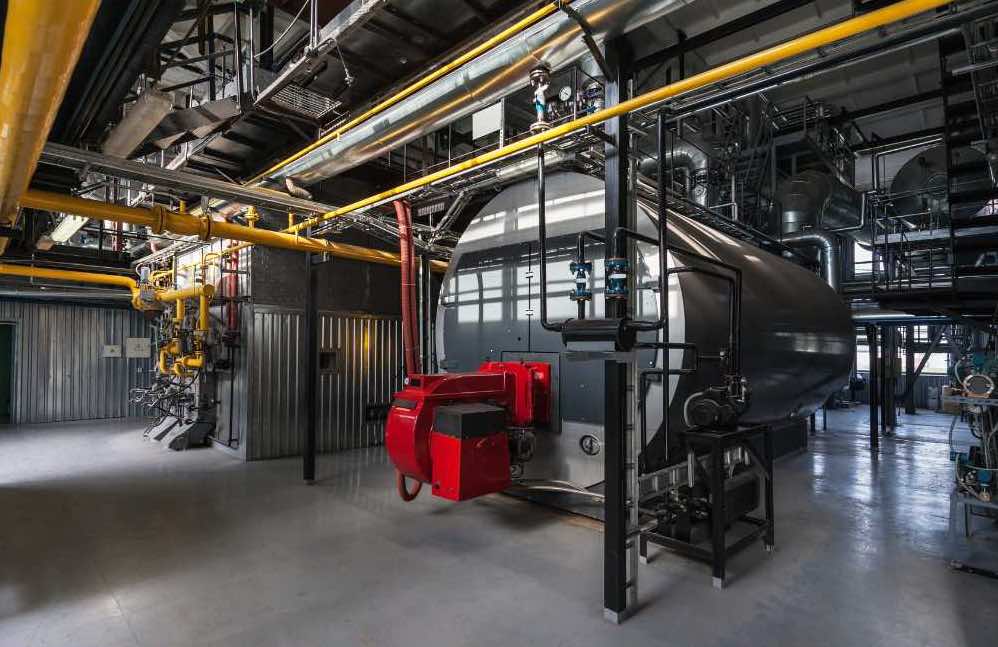
Boiler materials are the backbone of efficient and reliable power plant operations, playing a critical role in ensuring high performance under extreme conditions. From handling high temperatures and pressures to resisting corrosion, the right materials are essential for maximizing the longevity and efficiency of boiler systems. This article explores the science behind boiler materials, including corrosion-resistant alloys, high-temperature superalloys, and cutting-edge solutions for harsh environments. By understanding these materials, engineers can make informed decisions that optimize boiler performance and reduce long-term operational costs.
- Introduction
- Importance of Material Selection in Boiler Performance
- Overview of Boiler Material Requirements for Modern Power Plants
- The Science Behind Boiler Materials
- Key Properties for High-Performance Boiler Materials
- Challenges in Extreme Conditions: Temperature, Pressure, and Corrosion
- Corrosion-Resistant Boiler Materials
- Common Corrosion Challenges in Boilers
- Materials Engineered for Corrosion Resistance: Stainless Steels, Duplex Alloys, and Protective Coatings
- High-Temperature Alloy Boilers
- Why High-Temperature Alloys Are Essential
- Popular Alloys: Inconel, Hastelloy, and Superalloys
- Advances in Heat-Resistant Alloys for Power Plant Applications
- Boiler Materials for Extreme Conditions
- Materials That Perform in Harsh Environments
- High-Strength Steels for Elevated Pressure and Temperature
- Composite Materials and Their Role in Boiler Manufacturing
- Material Testing and Quality Assurance
- Standards for Boiler Material Testing
- Techniques for Evaluating Corrosion Resistance, Heat Tolerance, and Durability
- Future of Boiler Materials
- Emerging Trends in Material Science for Boilers
- Innovations Shaping the Next Generation of Boiler Materials
- Conclusion
- Recap of Key Insights
- Strategic Material Selection for Long-Lasting Boilers
1. Introduction
Importance of Material Selection in Boiler Performance
In power plant operations, boiler performance is intrinsically tied to the quality and suitability of the materials used in their construction. Boilers operate in environments of extreme temperature, pressure, and chemical exposure, where even minor material inadequacies can result in efficiency losses, premature failures, or costly downtime. Experienced engineers understand that material selection is not just about meeting baseline requirements but about optimizing the boiler’s life cycle and performance under real-world conditions. Materials must withstand thermal stress, resist oxidation and corrosion, and retain mechanical integrity over extended periods.
The implications of choosing the right boiler materials extend beyond immediate performance. They play a critical role in reducing maintenance costs, improving operational efficiency, and meeting increasingly stringent environmental standards. By prioritizing high-performance materials, power plants can ensure reliability and long-term sustainability.
Overview of Boiler Material Requirements for Modern Power Plants
Modern power plants demand materials capable of enduring harsh environments while maximizing efficiency. Traditional steels like carbon steel and low-alloy steels, such as SA-213 T22 and SA-387 Grade 11, have long been used in boilers. However, as plants push toward higher operational efficiencies with supercritical and ultra-supercritical technologies, advanced materials have become indispensable.
High-temperature creep strength is paramount in materials for superheater and reheater tubes, where alloys like T91, P92, and Inconel 617 have demonstrated superior performance. Corrosion resistance is equally critical, particularly in regions exposed to flue gases and water-side scaling, where stainless steels like 347H and high-chromium steels like 10CrMo910 excel.
Beyond functionality, modern materials must align with evolving environmental norms, including minimizing emissions and supporting renewable energy integration. These considerations underline the transition from conventional materials to innovative alloys, ceramics, and composite solutions, setting the stage for advancements in boiler technology.
2. The Science Behind Boiler Materials
Key Properties for High-Performance Boiler Materials
The demands on boiler materials in power plant applications go beyond conventional mechanical requirements, focusing on specific properties that dictate long-term reliability and efficiency. These properties include:
- Creep Strength: The ability of a material to resist deformation under constant stress at high temperatures is critical. Alloys like T91 (9Cr-1Mo-V) and P92 (9Cr-2W-V) exhibit superior creep resistance due to their optimized chromium and molybdenum content, which stabilize carbides and limit grain boundary sliding. Comparatively, T22 (2.25Cr-1Mo) offers good creep strength but is less suitable for ultra-supercritical conditions.
- Corrosion and Oxidation Resistance: High-chromium materials like Super 304H (18Cr-9Ni-3Cu) and HR3C (25Cr-20Ni-Nb) are widely used in superheaters and reheaters, where oxidation resistance at temperatures exceeding 600°C is essential. These materials outperform lower chromium steels like T11 (1.25Cr-0.5Mo), which are prone to scaling.
- Thermal Fatigue Resistance: Repeated thermal cycling causes microcracks and material degradation. Nickel-based alloys such as Inconel 740H excel here, offering better thermal expansion stability and fatigue resistance compared to ferritic steels like P91.
- Weldability and Fabrication: Materials like T23 (2.25Cr-1.6W) are favored for their excellent weldability with minimal preheat or post-weld heat treatment requirements. In contrast, higher-alloy grades like P92 require careful handling to avoid cracking during fabrication.
Challenges in Extreme Conditions: Temperature, Pressure, and Corrosion
- Extreme Temperatures :
Ultra-supercritical high pressure boilers operate at temperatures exceeding 620°C, where standard carbon and low-alloy steels fail due to rapid oxidation and creep deformation. High-chromium steels such as T91 and P92 are the backbone of high-temperature applications, with chromium content (9–12%) providing oxidation resistance.
However, for temperatures approaching 700°C, nickel-based alloys like Inconel 625 and Hastelloy X are indispensable. While these alloys deliver exceptional thermal and oxidative stability, their high cost limits their use to critical components such as superheater tubes and reheater headers. Advances in material technology have introduced new grades like Alloy 740H, which bridges the gap between affordability and high-temperature performance, making it an increasingly popular choice. - High Pressure
Modern boilers operate under pressures exceeding 250 bar, where material strength and fatigue resistance are critical. Ferritic-martensitic steels like P91 dominate high-pressure environments due to their low thermal expansion and high yield strength. Yet, for ultra-supercritical applications where pressures exceed 300 bar, materials like P92 and T122 provide enhanced creep strength due to their tungsten and niobium content. These alloys outperform traditional steels like T22, which struggle to maintain integrity under prolonged high-stress conditions. - Corrosion and Erosion
Corrosion challenges in boilers arise from exposure to flue gases, chlorides, sulfides, and ash deposits. Materials like HR3C and Super 304H incorporate high chromium and nickel contents to resist hot corrosion and sulfidation in extreme environments. In particularly aggressive conditions, nickel-based alloys such as Inconel 617 provide unparalleled resistance to both high-temperature oxidation and acidic environments.Erosion from ash particles and steam impingement presents another challenge, particularly in coal-fired plants. Solutions include using cladding or coatings such as HVOF-sprayed tungsten carbide or ceramic coatings to protect surfaces. When applied to base metals like P91, these coatings significantly enhance the lifespan of boiler components without the need for full alloy replacement.
3. Corrosion-Resistant Boiler Materials
Common Corrosion Challenges in Boilers
Corrosion is one of the most persistent threats to boiler integrity, directly impacting performance, maintenance costs, and lifespan. The high-temperature, high-pressure environment in boilers accelerates oxidation, while exposure to acidic flue gases, water impurities, and ash particles exacerbates localized attack mechanisms.
Key types of corrosion in boilers include:
- High-Temperature Oxidation: Common in superheater and reheater tubes, where materials are exposed to oxidizing gases above 600°C.
- Sulfur-Induced Corrosion: Coal-fired boilers and plants using high-sulfur fuels encounter severe corrosion due to SO2 and SO3 reacting with water vapor to form sulfuric acid.
- Water-Side Corrosion: Impurities in feedwater, such as dissolved oxygen and chlorides, promote pitting and crevice corrosion.
- Ash Erosion-Corrosion: A combination of erosive wear from ash particles and corrosion from alkali salts and chlorides in flue gases.
Addressing these challenges requires careful selection of boiler materials tailored to specific operational conditions.
Materials Engineered for Corrosion Resistance
- Stainless Steels
Stainless steels are widely used in boilers due to their chromium-rich oxide layer, which provides effective protection against oxidation and high-temperature corrosion.- 304H Stainless Steel: With high chromium (18–20%) and nickel (8–10.5%) content, this austenitic stainless steel offers excellent resistance to high-temperature scaling but is susceptible to chloride-induced stress corrosion cracking.
- 347H Stainless Steel: Similar to 304H but stabilized with niobium, 347H resists intergranular corrosion caused by chromium carbide precipitation, making it suitable for superheater tubes in high-temperature environments.
- Super 304H: An advanced grade with added copper (up to 3%), offering improved strength and oxidation resistance compared to traditional grades.
- Duplex Alloys
Duplex stainless steels combine ferritic and austenitic microstructures, offering superior strength and corrosion resistance.- 2205 Duplex Stainless Steel: With 22% chromium and balanced nickel-molybdenum content, this material resists pitting and crevice corrosion, particularly in feedwater heaters and economizers.
- 2507 Super Duplex Stainless Steel: Enhanced with 25% chromium and higher nickel and molybdenum levels, 2507 performs exceptionally well in environments with chloride exposure, such as desalination plants integrated with power stations.
- Stainless Steels
Compared to standard stainless steels, duplex alloys offer nearly double the strength, allowing thinner wall designs and reduced overall material costs. However, they require precision welding techniques to avoid phase imbalances.
- Protective Coatings
Protective coatings are indispensable in extending the life of base materials under aggressive operating conditions.
- Protective Coatings
- High-Velocity Oxygen Fuel (HVOF) Coatings: These tungsten carbide-based coatings provide exceptional resistance to erosion and corrosion. They are commonly applied to P91 or P92 steel surfaces in coal-fired boilers.
- Aluminized Coatings: Aluminum diffusion coatings are used to form a protective aluminide layer on high-temperature components, mitigating oxidation and sulfidation in gas-fired boilers.
- Ceramic Coatings: Offering superior thermal insulation and corrosion resistance, ceramic-based coatings are ideal for areas exposed to ash erosion and high-velocity flue gases.
While protective coatings enhance surface properties, they are not a substitute for inherently corrosion-resistant base materials. A combination of advanced alloys and coatings often provides the best long-term solution.
4. High-Temperature Alloy Boilers
Why High-Temperature Alloys Are Essential
In modern power plants, boiler components face extreme temperatures, often exceeding 620°C in ultra-supercritical units. At these conditions, conventional carbon steels and low-alloy steels become prone to creep deformation, scaling, and rapid oxidation. High-temperature alloys are indispensable in these scenarios, offering the combination of:- Creep Strength: Resistance to long-term deformation under high stress and temperature.
- Oxidation Resistance: Ability to maintain a stable oxide layer to prevent rapid material degradation.
- Thermal Fatigue Resistance: Tolerance to cyclic temperature changes that cause microstructural damage.
Popular Alloys: Inconel, Hastelloy, and Superalloys
-
- Inconel Alloys
Inconel, a family of nickel-based alloys, is renowned for its excellent performance in high-temperature, oxidizing, and corrosive environments.
- Inconel 625: With 20–23% chromium, 8–10% molybdenum, and a nickel base, Inconel 625 excels in resisting oxidation and sulfidation, making it suitable for reheater and superheater components. Its creep strength is superior to traditional steels like P91, although its cost restricts it to the most demanding sections.
- Inconel 740H: Designed for advanced ultra-supercritical boilers, 740H delivers unparalleled strength at temperatures exceeding 700°C. Its optimized nickel, chromium, and cobalt composition offers better weldability and fatigue resistance than earlier Inconel grades.
- Hastelloy Alloys
Hastelloy alloys, with their unique blend of nickel, molybdenum, and cobalt, offer exceptional corrosion resistance alongside high-temperature performance.
- Hastelloy X: Widely used in gas-fired boilers, Hastelloy X provides superior resistance to oxidation, carburization, and thermal fatigue. It performs well in regions subjected to fluctuating thermal cycles and high gas velocities. Compared to Inconel, it offers slightly better resistance to hot corrosion but at a higher cost.
- Superalloys Superalloys combine nickel, iron, cobalt, and refractory metals, delivering unmatched performance in extreme environments.
- Inconel Alloys
Inconel, a family of nickel-based alloys, is renowned for its excellent performance in high-temperature, oxidizing, and corrosive environments.
-
-
- Alloy 617: Known for its high-temperature stability, Alloy 617 resists both oxidation and creep deformation, outperforming Inconel 625 in applications exceeding 650°C. It is often used in high-stress regions of ultra-supercritical boilers.
- Haynes 282: A newer superalloy optimized for long-term creep resistance, Haynes 282 offers better weldability than traditional options like Alloy 718, making it a preferred choice for advanced boiler designs.
-
Advances in Heat-Resistant Alloys for Power Plant Applications
The evolution of high-temperature alloys is driven by the need to improve efficiency and reduce emissions. New alloy developments focus on optimizing microstructures, enhancing weldability, and balancing cost with performance.-
- Fe-Ni-Cr Alloys: Alloys like Sanicro 25, developed specifically for supercritical steam conditions, provide a cost-effective alternative to nickel-based alloys while delivering comparable performance in terms of creep strength and oxidation resistance.
- Advanced Ferritic Steels: Alloys such as T122 (12Cr-1Mo-WVNb) and HCM12A are gaining traction due to their high creep rupture strength and compatibility with advanced manufacturing techniques.
- Coated Alloys: High-temperature alloys are increasingly paired with advanced coatings, such as aluminized or ceramic layers, to extend their lifespan and performance in harsh conditions.
5. Boiler Materials for Extreme Conditions
Materials That Perform in Harsh Environments
Boilers operating under extreme conditions face simultaneous stress from high pressure, elevated temperatures, corrosive environments, and erosive particulates. Material selection is crucial to ensure longevity and operational efficiency under such harsh environments. These materials must exhibit:- Exceptional Strength to withstand pressures exceeding 300 bar.
- Thermal Stability to operate efficiently at supercritical and ultra-supercritical temperatures.
- Corrosion and Oxidation Resistance to combat exposure to acidic gases, salts, and impurities.
High-Strength Steels for Elevated Pressure and Temperature
- Ferritic and Martensitic Steels
Ferritic steels are the backbone of boiler manufacturing due to their high strength-to-cost ratio and resistance to creep deformation at elevated temperatures.
- P91 (9Cr-1Mo-V Steel): One of the most widely used materials in modern boilers, P91 delivers high creep strength and excellent thermal conductivity. Its chromium and molybdenum content provide good resistance to oxidation and scaling, but it requires precise post-weld heat treatment to maintain its properties.
- P92 (9Cr-2W-1Mo-V Steel): An improvement over P91, P92 features tungsten addition, enhancing creep rupture strength and oxidation resistance. It is a preferred choice for superheater tubes in ultra-supercritical boilers.
- HCM12A (12Cr-2Mo-0.5W-VNb Steel): With higher chromium content than P91, HCM12A offers superior corrosion resistance and long-term creep strength, making it ideal for harsh environments with high sulfur or chloride content.
- Austenitic Steels Austenitic steels like Super 304H and HR3C are used in the hottest sections of boilers, such as superheaters and reheaters, where temperatures exceed 650°C. These steels have high nickel content, improving thermal stability and creep resistance, though they are more expensive than ferritic grades.
- High-Chromium Alloys Materials like Sanicro 25 (22Cr-25Ni) bridge the gap between austenitic steels and nickel-based alloys, offering a cost-effective solution with enhanced resistance to oxidation and high-temperature corrosion.
Composite Materials and Their Role in Boiler Manufacturing
Composite materials are increasingly gaining traction in boiler applications due to their ability to combine desirable properties of metals, ceramics, and polymers.- Metal Matrix Composites (MMCs) These materials incorporate ceramic reinforcements like silicon carbide or alumina into metallic matrices, providing exceptional wear resistance and thermal stability. MMCs are particularly useful in erosive environments, such as boiler economizers and air preheaters.
- Ceramic Matrix Composites (CMCs) CMCs, such as silicon carbide composites, can withstand extreme temperatures beyond 1,200°C, making them suitable for advanced gas-fired boilers. Although their brittleness limits their widespread use, ongoing advancements in fracture toughness are expanding their applicability.
- Clad Materials Cladding combines a corrosion-resistant alloy layer with a structural steel substrate, offering cost and performance benefits. For example:
- Inconel 625 Cladding: Often used for water-wall panels in waste-to-energy boilers, where exposure to acidic flue gases and slag necessitates high corrosion resistance.
- Stainless Steel Cladding: Economical and effective for areas prone to water-side corrosion in feedwater systems.
6. Material Testing and Quality Assurance
Standards for Boiler Material Testing
For boiler materials, rigorous testing and adherence to global standards are non-negotiable to ensure safety, performance, and longevity. International standards provide the framework for evaluating mechanical properties, thermal performance, and resistance to harsh environments. Key standards include:- ASME Section II: Covers the specifications for ferrous and non-ferrous materials used in boilers and pressure vessels. It defines requirements for tensile strength, yield strength, and allowable stress limits.
- EN 10216 and EN 10217: European standards for seamless and welded steel tubes used in high-pressure boilers, focusing on chemical composition and mechanical properties.
- ASTM Standards (e.g., ASTM A335, A213): Provide guidelines for high-temperature steel tubes and pipes, particularly in superheater and reheater applications.
- ISO 8501 and ISO 9227: Standards for corrosion testing, ensuring materials can withstand harsh environmental conditions, such as exposure to salt spray or acidic gases.
Techniques for Evaluating Corrosion Resistance, Heat Tolerance, and Durability
- Corrosion Resistance Testing
Corrosion is a primary cause of boiler failure, making thorough testing essential. Common methods include:
- Salt Spray Test (ASTM B117): Evaluates resistance to chloride-induced corrosion. Materials like Super 304H and Sanicro 25 show superior performance compared to standard ferritic steels.
- Electrochemical Testing: Techniques such as potentiodynamic polarization measure a material’s resistance to localized corrosion, particularly in areas exposed to acidic condensates.
- High-Temperature Corrosion Testing: Materials like Inconel 625 are subjected to accelerated oxidation and sulfidation tests to assess their longevity in extreme conditions.
- Heat Tolerance Testing
High-performance boiler materials must endure prolonged exposure to temperatures exceeding 600°C without degradation. Key tests include:
- Creep Testing: Measures a material’s deformation under constant stress and temperature over time. For example, P91 and P92 outperform traditional ferritic steels in creep strength, but Alloy 617 and Haynes 282 are better suited for ultra-supercritical conditions.
- Thermal Cycling Tests: Evaluate resistance to cracking and fatigue during rapid temperature changes. Austenitic steels like HR3C show superior resilience compared to ferritic grades.
- Mechanical Durability Testing
Durability under high-stress environments is critical. Tests include:
- Tensile Testing: Determines yield strength and ultimate tensile strength. High-chromium steels like HCM12A exhibit exceptional strength in high-pressure zones.
- Impact Testing (Charpy Test): Assesses toughness at varying temperatures, ensuring materials maintain integrity during sudden mechanical loads.
- Hardness Testing: Materials like Hastelloy X undergo Brinell or Rockwell hardness tests to ensure resistance to abrasive wear.
- Advanced Non-Destructive Testing (NDT) Techniques
NDT methods are employed to detect flaws in boiler components without causing damage:
- Ultrasonic Testing (UT): Ideal for detecting internal cracks or inclusions in steel tubes.
- Radiographic Testing (RT): X-rays or gamma rays are used to identify voids or inclusions in welded areas.
- Eddy Current Testing: Evaluates tube integrity, particularly in superheaters and reheaters, to detect corrosion-induced thinning.
7. The Role of Digital Twin Technology
Emerging Trends in Material Science for Boilers
The field of boiler materials is rapidly evolving, driven by the increasing demand for higher efficiency, lower emissions, and the ability to operate under ultra-supercritical conditions. Several emerging trends in material science are shaping the future of boiler technology:
- Advanced High-Strength Alloys
- MarBN Steel (Martensitic Steel with Boron and Nitrogen): A promising material for ultra-supercritical boilers, MarBN improves upon traditional ferritic-martensitic steels like P91 and P92. Its boron and nitrogen additives enhance creep strength and resistance to thermal fatigue.
- Vanadium-Modified Alloys: Alloys with vanadium additions are being developed to improve oxidation resistance and reduce creep deformation under extreme temperatures.
- Oxide Dispersion Strengthened (ODS) Alloys
- ODS steels, such as MA956 and PM2000, are gaining traction due to their exceptional creep resistance at temperatures above 700°C. These alloys utilize fine oxide particles (alumina or yttria) to prevent grain boundary sliding, a common issue in high-temperature applications.
- Nickel-Based Superalloys
- Alloys like IN740H and Haynes 282 are being refined to withstand temperatures exceeding 750°C, a necessity for advanced ultra-supercritical power plants. These materials offer superior resistance to both thermal creep and high-temperature corrosion.
- Coated and Clad Materials
- Coating technologies are advancing, with Thermal Barrier Coatings (TBCs) now utilizing nano-engineered ceramics for enhanced thermal resistance.
- Clad materials, such as Inconel 625-clad steels, provide cost-effective solutions for aggressive environments, combining high corrosion resistance with structural integrity.
Innovations Shaping the Next Generation of Boiler Materials
- 3D Printing and Additive Manufacturing
- Additive manufacturing is revolutionizing the design and fabrication of complex boiler components. Materials like Inconel 718 and Haynes 230 are being explored for 3D printing, allowing for intricate geometries and enhanced heat dissipation.
- The layer-by-layer deposition process ensures precise control over material composition, enabling the creation of functionally graded materials optimized for specific regions within the boiler.
- Nanomaterials
- Nanotechnology is introducing novel materials with unprecedented properties. For example, graphene-based coatings exhibit exceptional thermal conductivity and corrosion resistance, making them ideal for boiler surfaces exposed to extreme conditions.
- Nano-engineered alloys with grain refinement at the nanoscale show improved creep strength and fatigue resistance, extending the operational life of boiler components.
- Hybrid and Composite Materials
- Hybrid materials, such as ceramic-metal composites, are emerging as strong contenders for extreme environments. These materials combine the toughness of metals with the high-temperature stability of ceramics.
- Fiber-reinforced composites, such as carbon-fiber-reinforced silicon carbide (C/SiC), offer lightweight yet durable options for specific boiler applications.
- Environmental and Sustainable Materials
- The shift toward carbon neutrality has spurred research into sustainable materials for boiler construction. Recyclable alloys and materials with low embodied energy are gaining attention in the industry.
- Biomimetic materials, inspired by natural structures, are being developed to enhance durability and self-healing properties in boiler applications.
8. Conclusion
Recap of Key Insights
Boiler materials are the backbone of modern power generation, dictating the efficiency, reliability, and longevity of boiler systems. Throughout this discussion, several critical points have emerged:
- Material Selection Drives Performance: Choosing the right materials is crucial for optimizing performance under high-pressure, high-temperature, and corrosive environments. Advanced materials like nickel-based superalloys, oxide dispersion-strengthened steels, and high-chromium steels have proven their value in ultra-supercritical applications.
- Corrosion Resistance Is Non-Negotiable: Corrosion remains a significant challenge in boiler operations, particularly in environments exposed to aggressive flue gases and condensates. Materials such as duplex stainless steels, Inconel alloys, and coated solutions like Inconel-clad ferritic steels offer robust defense mechanisms.
- High-Temperature Performance Is Key: Boilers operating under ultra-supercritical conditions require materials capable of withstanding temperatures exceeding 700°C without degradation. Superalloys like Haynes 282 and innovative materials like MarBN steel are setting new benchmarks in heat resistance and creep strength.
- Testing and Innovation Ensure Longevity: Rigorous material testing and adherence to global standards are vital for ensuring reliability. Emerging technologies, such as 3D printing, nanotechnology, and hybrid composites, promise to further enhance the durability and performance of boiler materials.
Strategic Material Selection for Long-Lasting Boilers
When selecting boiler materials, engineers and consultants must adopt a holistic approach, considering operational conditions, long-term performance, and cost-effectiveness. Key strategies include:
- Tailoring Materials to Specific Conditions: Different boiler zones face varying stresses. Superheater and reheater sections demand high-temperature alloys like Inconel 740H, while water walls and economizers can benefit from high-strength steels like P91 or P92.
- Evaluating Life-Cycle Costs: While advanced materials may have higher upfront costs, their superior resistance to corrosion and thermal fatigue often results in lower maintenance costs and extended service life.
- Incorporating Coatings and Cladding: Protective coatings and cladding materials, such as Inconel 625 or thermal barrier coatings, offer cost-effective solutions for enhancing resistance to environmental and operational stresses.
Ultimately, selecting the right boiler materials is both a science and an art. It requires balancing performance requirements, compliance with industry standards, and budgetary constraints. As material science continues to evolve, power plant operators have an unprecedented opportunity to optimize their systems, ensuring long-term reliability and efficiency. By leveraging innovative materials and technologies, engineers can design boilers that truly stand the test of time.


